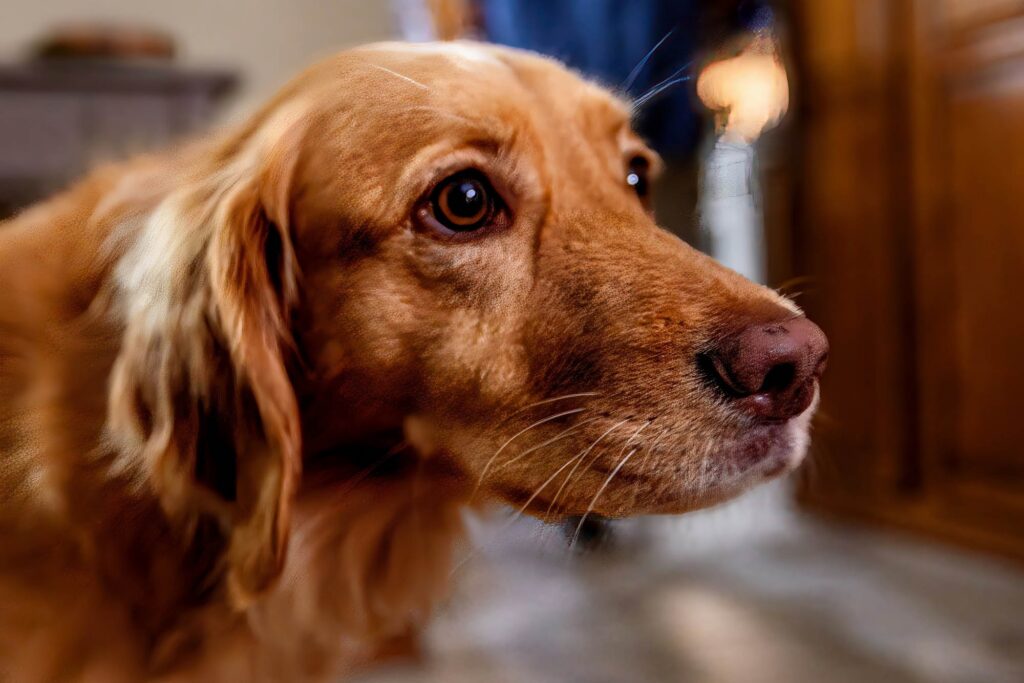

Senior pictures with your dog
The dog is in half the photos on your phone. It belongs in these. Here is how we put a student and a dog in the same frame and make both of them look like the one everyone came to see.
Why the dog belongs in the frame
Walk through your house and count the places the dog shows up. The end of the bed. Passenger seat. That spot by the door where the tail starts before anyone touches the leash. Your son or daughter and that dog are a pair right now, and the portrait should say so.
A dog in the frame also does something a prop can’t. Hands get a job. Shoulders drop. The smile that shows up when a dog leans into a knee is the one we chase all session, and the dog hands it to us early.
It works for a cat too, and everything below applies, with the walk swapped for a nap.
Pose and frame ideas that work
We pose. Nothing forced, nothing cheesy, and nothing a dog wouldn’t do on a normal Tuesday. These are the frames we build first, and the planning call decides which ones your dog is built for.
The walk
Leash in hand, the two of them moving toward the camera down a road or a path. We shoot it wide and low so the dog has weight in the frame instead of being a smudge at the bottom. The best frames come on the second or third pass, once the dog stops checking on us.
Head on the knee
Seated, the student’s hand resting on the dog’s shoulders, the dog’s chin on a knee. The quietest frame of the day. If your dog leans, this is the one.
Forehead to forehead
Crouched to the dog’s level, foreheads nearly touching. It takes a dog who knows the student’s face up close, which is most of them. We light it from the side so the two profiles read as one shape.
The look-up
The student stands, the dog sits at their feet and looks up. A treat held at chin height puts the eyes where we want them, and the frame reads as devotion without anybody performing it.
The studio frame
Dark backdrop, light we build, the two of them and nothing else. Fur picks up edge light in a way it never does outside, and a black dog finally shows its shape.
Blue hour
Some sessions happen outside after sunset. The sky goes deep blue, we bring the light, and the dog’s eyes stop squinting because there is no sun to squint at. Big dogs and city dogs both look like they own the street.

How to plan it
The planning call is where this gets decided. It is short, on Zoom or FaceTime, and by the end of it we know which stretch of the session the dog joins, who holds the leash between frames, and whether we are building this in the studio, outside after sunset, or both.
Bring the dog for part, not all
Most dogs give us a good stretch and then start negotiating. We put the dog’s frames in one block, then the leash goes to a second adult and the rest of the session belongs to the student. Everyone gets the frame they came for, and the dog gets the rest of the afternoon off.
A second adult
Someone whose only job is the dog: water, treats, a lap around the block while we change the light. One parent works. A sibling with a strong grip works better.
A real walk first
Not a trip to the mailbox. Long enough that the dog arrives with the edge off and something left. Tired dogs hold a sit. Wired dogs hold nothing.
The good treats
Whatever the dog would sell you out for. Cheese, hot dog, the freeze-dried liver that lives on the top shelf. Small pieces, high value, and the second adult holds the bag so the student’s hands stay clean in the frame.
Grooming, a few days before
A bath and a brush-out a few days ahead, not the morning of. Fresh from the groomer a coat stands up and looks fluffed; a few days later it settles back into the coat you know. Trim the eye fur so we can see the eyes.
The collar
Bring the everyday collar and a plain leash in a color that doesn’t fight the outfit. A neon leash in a dark studio frame is the first thing anyone sees. Leather, rope, or a slip lead in a muted tone hides in plain sight.
Outfits that survive the fur
The dog sheds on whatever is closest, and the closest thing is the outfit. Pick colors by the coat. A black dog against a white sweater leaves a trail. White dogs on black do the same. Mid-tones hide it: olive, rust, camel, denim, charcoal against a light dog, cream against a dark one.
Texture matters more than color. Fleece, velvet, and knit grab hair and hold it. Denim, leather, waxed canvas, and tight-weave wool let it slide off, and they photograph with depth under built light. Bring a lint roller anyway. We will have one too.
For the studio frame, the outfit should be darker than the dog or lighter than the dog, never a match. A brindle dog and a brown jacket become one blob against a dark backdrop. Contrast gives each of them an edge.
Pack a change of clothes: one outfit for the dog block, one for the rest. It solves the hair problem without anyone thinking about it during the session.
What to expect from us
You get both of us. Jeff builds the light and runs the camera. Alisha directs the posing, which with a dog in the frame means she is also the one reading the dog: where it wants to sit, which side it leans to, when it has one more frame in it and when it doesn’t.
The first stretch of any session with a dog belongs to the dog. No camera up, no direction, a sniff of the backdrop and the light stands and the people. A Shaggy Dog Studio session on its own runs about an hour to an hour and a half, and the settling-in time is inside that number, not added to it. When the dog joins a senior session, the same rule holds for the block the dog is in: settle first, then shoot.
In the studio it is a dark backdrop and light we build. Outside, some sessions happen after sunset, in the blue hour, with our light doing the work the sun is not there to do.
After the session, editing takes about two to three weeks. Wall art and albums take about six to eight weeks.
The studio the dog walks into: Top 10 Photographer in the World · Three consecutive years.
One session or two
There are two ways to do this and both are on the table at the planning call. The dog joins the senior session for a block, and the portrait of the two of them lives beside the portraits of the student alone. Or you book a Shaggy Dog Studio session outright, built around the dog from the first minute, with the student in some of the frames and the dog carrying the rest. Families who want both get both; the sessions stand on their own.
The frame we are after is the same either way: the two of them, lit like a cover, unmistakably yours. Not a yearbook page with a dog in the corner.
Questions
Can my dog be in my senior pictures?
Yes. Dogs and cats are welcome. The dog joins for one block of the senior session, or you book a Shaggy Dog Studio session built around the dog. We decide which on the planning call.
How long is the dog at the session?
One block, usually near the start, and the first part of that block belongs to the dog with no camera up. A second adult takes the dog once its frames are done, and the rest of the session belongs to the student.
What if my dog won’t sit still?
Then we don’t ask it to. The walk, the look-up, and the forehead frame all work with a dog in motion, and a real walk beforehand takes most of the edge off. We pose the student. The dog gets a treat and patience.
What should we wear for senior pictures with a dog?
Mid-tones that don’t match the coat, in fabrics that shed hair instead of holding it: denim, leather, canvas, tight wool. Bring a second outfit for the frames without the dog.
Do you do senior pictures with pets in La Crosse?
Yes. The senior session and Shaggy Dog Studio are both based in La Crosse, in the studio on a dark backdrop or outside after sunset. Your dog rides along for either one.

Shaggy Dog Studio is the pet side of J.L. Wiswell Photography in La Crosse, Wisconsin. Top 10 Photographer in the World · Three consecutive years. About us
Bring the dog
Tell us about the dog on the planning call: the name, the coat, the one thing it would do anything for. We build the light around the two of them from there.