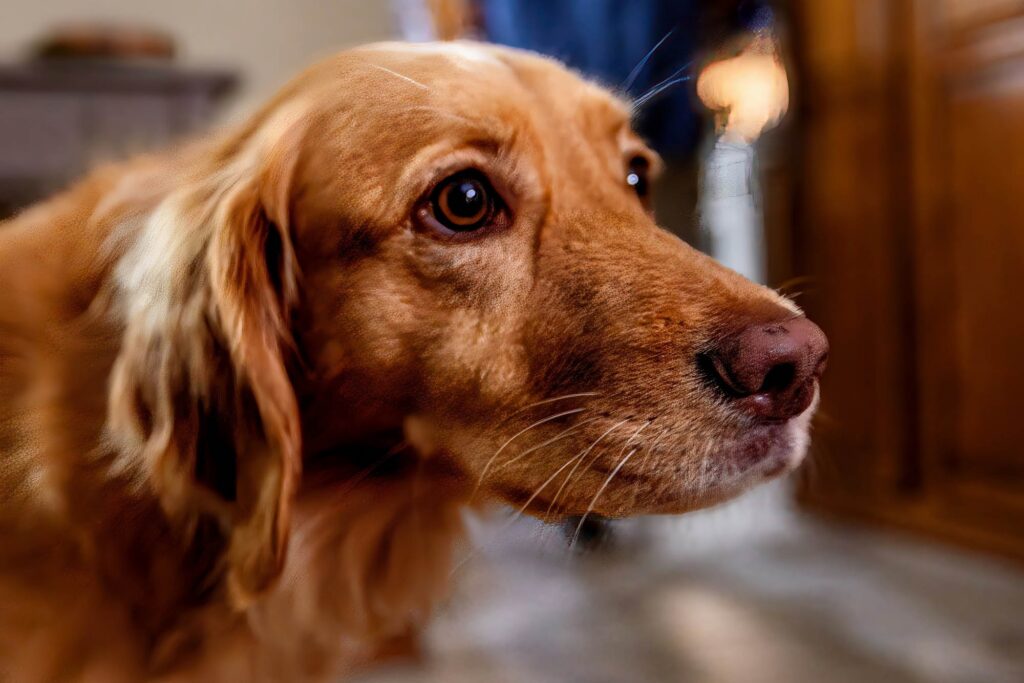

How to prepare your dog for a professional photo session
Most of what makes a dog portrait work happens before anyone touches a camera: the walk, the treat in your pocket, the time your dog spends deciding the studio is fine. Here is what to do the week before, the morning of, and what happens once you walk in the door.
The week before
Book the groomer for three to five days before the session, not the morning of. A fresh cut needs a few days to settle; the day it’s done, the coat stands up in places it never does and the face reads a little surprised. Three days later it lies the way you know it. If your dog doesn’t see a groomer, a brush-out every evening that week does most of the work, and a shedding coat gives up far less on a dark backdrop when the loose hair came out at home.
Nails matter more than people expect. Paws are in almost every frame, and long nails change how a dog stands: weight back on the heels, toes splayed. Trim them a few days out, or have the groomer do it.
The bath goes two or three days before, same logic. Day-of shampoo leaves a coat flat and a dog who smells wrong to himself, and a dog who smells wrong to himself spends the first half hour rolling on our floor. Skip anything new that week. This is not the moment for a first shave of a double coat, a different haircut, or an experiment with whitening shampoo. Bring us the dog you know.
Groomers book up, so put the appointment on the calendar when you book the session. For the background on coat types and what a full groom involves, the overview of dog grooming is a good start.
Wipe, don’t wash
The morning of, a damp cloth on the face for eye crust and a dry towel down the back. That’s the whole day-of routine.
Thirty seconds a day
A sit and a look-at-me, once a day with a treat, all week. Not a training plan. A reminder, so the cue still works in a new room.
The morning of
Walk first. A real one, long and slow, with sniffing allowed. Not fetch. Fetch winds a dog up and sends them to the studio with the engine running; a sniffy walk empties the tank the useful way, brain before legs. Aim to arrive with a dog who has been outside for a good stretch and has nothing left to prove.
Feed a light meal, or an early one. A full dog doesn’t care about cheese, and cheese is how we get the ears forward. Bring the treats that outrank everything else in your house: the chicken, the string cheese, the thing you keep on the top shelf. Kibble doesn’t count in a room with two strangers and a light stand. Cut everything small before you leave, so a hundred rewards don’t add up to a second breakfast.
One toy, the favorite. If it squeaks, better. Keep it in your bag until we ask for it; a toy that comes out in the parking lot is old news by the time the lights are up.
Take a potty stop right before you walk in, even if they went at home. New rooms and new smells move things along. Then the usual collar and the leash they walk on every day. Nothing new, nothing stiff. If they own a bandana or a bow tie they’ve worn before, bring it. One they’ve never worn stays home; today is not the day to find out.
Their best treats
The high-value kind, cut small, more than you think you’ll need.
One toy
The one they’d pick. A squeaker earns its place.
Their own collar and leash
The daily ones. A new collar gets scratched at for an hour.
Water from home
Some dogs won’t drink from a strange bowl. A towel comes in handy too, for drool and wet paws.
What happens at the session
Before the day, we talk on Zoom or FaceTime, and the call is about your dog. The treat that works, the sound that gets the ears up. Whether they sit on cue at home and forget it in a new room, which side they favor, what they do when a stranger crouches. We build the session around the answers.
Sessions run about an hour to an hour and a half, and the first stretch belongs to the dog. They sniff the studio and meet the lights while nobody is asking anything of them.
Then we shoot. Jeff runs the light and the camera. Alisha works the pose, which with a dog means the treat hand, the squeak, the whistle, the half-step back that lifts a chin. Studio work in La Crosse is a dark backdrop with light we build, so the coat separates from the background, the eyes catch, and nothing behind the dog competes with the dog. Some sessions happen outside after sunset, with the same light brought along. Either way the rule holds: nothing forced. A dog who needs a minute gets a minute.

The dog who needs more time
Some dogs walk in like they own the place. Others need a lap of the room and a look at every corner first. Tell us on the call which one you have, and we plan the settling-in stretch for that dog. An anxious dog gets to choose the corner; we bring the light to where the dog is instead of moving the dog to where the light is. The leash stays on as long as it helps. You stay close.
Watch the treats. A dog who takes cheese is a dog who is fine. One who turns down cheese is telling you to slow down, and we listen. Don’t rush the morning either: skip the errands, leave early, walk in unhurried, because a dog reads the leash hand before they read the room. If you have real concerns about how your dog handles new places, ask your vet before the session. Handling and timing are our end of it.
The high-energy dog is the opposite problem with the same answer. Here the walk matters most, long and calm. Don’t run them ragged, though; a dog with nothing left droops in the eyes, and the eyes are the portrait. We want tired legs and a working brain. The squeaker is a tool, not a toy, so it stays in your pocket until the ears need lifting.
Older dogs
An older dog is often the easiest dog in the room. They hold a stay better than any puppy, they know exactly where the treat hand is, and they settle into a lying-down portrait like they’ve been waiting for someone to suggest it. Plan for shorter stretches and more rests. Bring the bed or blanket they sleep on if it travels, and tell us about stiff hips or a side they prefer, so the poses stay low and comfortable.
The grey muzzle, the cloudy eye, the slower step: none of it is a problem to solve. It’s the dog. Bring their favorite low-effort trick, a head tilt or a paw, and skip anything that asks for a jump.

Two dogs, or three
Two dogs in one frame is normal. Bring a second person if you can; one handler per dog is the difference between a stay and a wrestling match. Separate treats, each dog’s favorite, in separate pockets. On the call, tell us who holds a sit and who doesn’t, which one is the ringleader, and whether you want them together, on their own, or both.
Walk them together that morning and feed them the same light meal. If one of them has never held still next to the other, don’t practice it the night before. That part is our problem, and it usually comes down to one handler, one treat, and a squeak at the right second.
Cats, briefly
Cats are welcome, and cats run on their own clock. Bring them in the carrier they know and let them come out on their own; a cat set down on the backdrop bolts, a cat who walks onto it stays. A wand toy they can’t leave alone beats any treat. The settling-in stretch matters more for a cat, not less, so don’t skip it and don’t apologize for it. Everything else here still applies: no bath the morning of, the usual collar if they wear one, a quiet house before you leave.
If you’re in a few frames
Most people want a frame or two with their dog, and a dark backdrop makes it easy. Wear a dark, solid top with sleeves and no logo, and you become the shape the dog sits against: your face and hands stay, the shirt falls away. Skip patterns and bright white, which pull the eye off the dog. Dress for a nice dinner, not the walk. Hair done, because the dog’s will be. Your hands are in the frame, so trim the nails and take off the smartwatch. Don’t try to match the dog. That’s the whole list.
After the session
Editing runs about two to three weeks. Then you come back and see the portraits large, in person, and we design the wall art with you, in the room, for the space it’s going to live in. Wall art and albums take about six to eight weeks from design to your door.
What that means for your calendar: if you want the finished piece for a particular date, count back about three months and book from there. Everything else on this page fits in one bag and one long walk.
Questions
How long does a dog photo session take?
About an hour to an hour and a half, including settling-in time. The first stretch belongs to the dog: sniffing the studio, meeting the lights, deciding the room is fine. Shooting starts once they’ve decided.
Should I bathe my dog before a photo session?
Yes, two or three days before, not the morning of. A day-of bath leaves the coat flat and gives you a dog who spends the first half hour rolling on the floor. Groom three to five days out for the same reason, and trim the nails; paws are in almost every frame.
What should I bring to a dog photo session?
Their best treats cut small, one favorite toy, the collar and leash they use every day, water from home, and a towel. If they have a bandana or bow tie they’ve already worn, bring it. Leave anything new at the store.
My dog won’t sit still. Can you still photograph them?
Yes. Direction for a dog is a treat hand and a sound at the right second, and the session is built around your dog after we’ve talked on the call. A long walk that morning does more than any command. Motion is fine; we light for it.
Do you photograph cats?
Yes. Bring them in the carrier they know, let them come out on their own time, and pack the wand toy they can’t resist. Cats need more of the settling-in stretch, not less, and the session is planned for that.

Shaggy Dog Studio is the pet side of J.L. Wiswell Photography in La Crosse, Wisconsin. Top 10 Photographer in the World · Three consecutive years. About us
Bring the dog. We’ll bring the light.
One long walk, one bag of treats, and a dog who gets the first stretch of the session to himself. The rest is ours.