



The verdict
Ask a photographer about the holy trinity and nobody is thinking about church. They mean a fast wide zoom, a fast standard zoom and a fast telephoto, which between them cover everything short of sports and wildlife. You can buy the same range in a single 28-300, and you pay for it in aperture, in size, and in the quality you only notice once the picture is large.
I bought all three at once, wrote this review while they were still new to me, and then went and lived with them. Two of them are still in what I carry. One is gone. The part that stings slightly is that this review already named which one, in a sentence I wrote long before I had any reason to know I was right. Two of these stay in the bag for our senior portrait sessions in La Crosse.
These three lenses exist in the shape they do because of the RF mount itself. A wider throat and a shorter flange distance gave Canon room for apertures and optical designs the EF mount could not hold. The feature almost nobody sets up is the control ring, which sits so close to the focus ring that most people never notice it is a second control at all. Mine is assigned to ISO. Between that ring and the two dials I can move shutter, aperture, ISO and white balance through an entire portrait session without opening a menu or touching the screen.
Lens 01
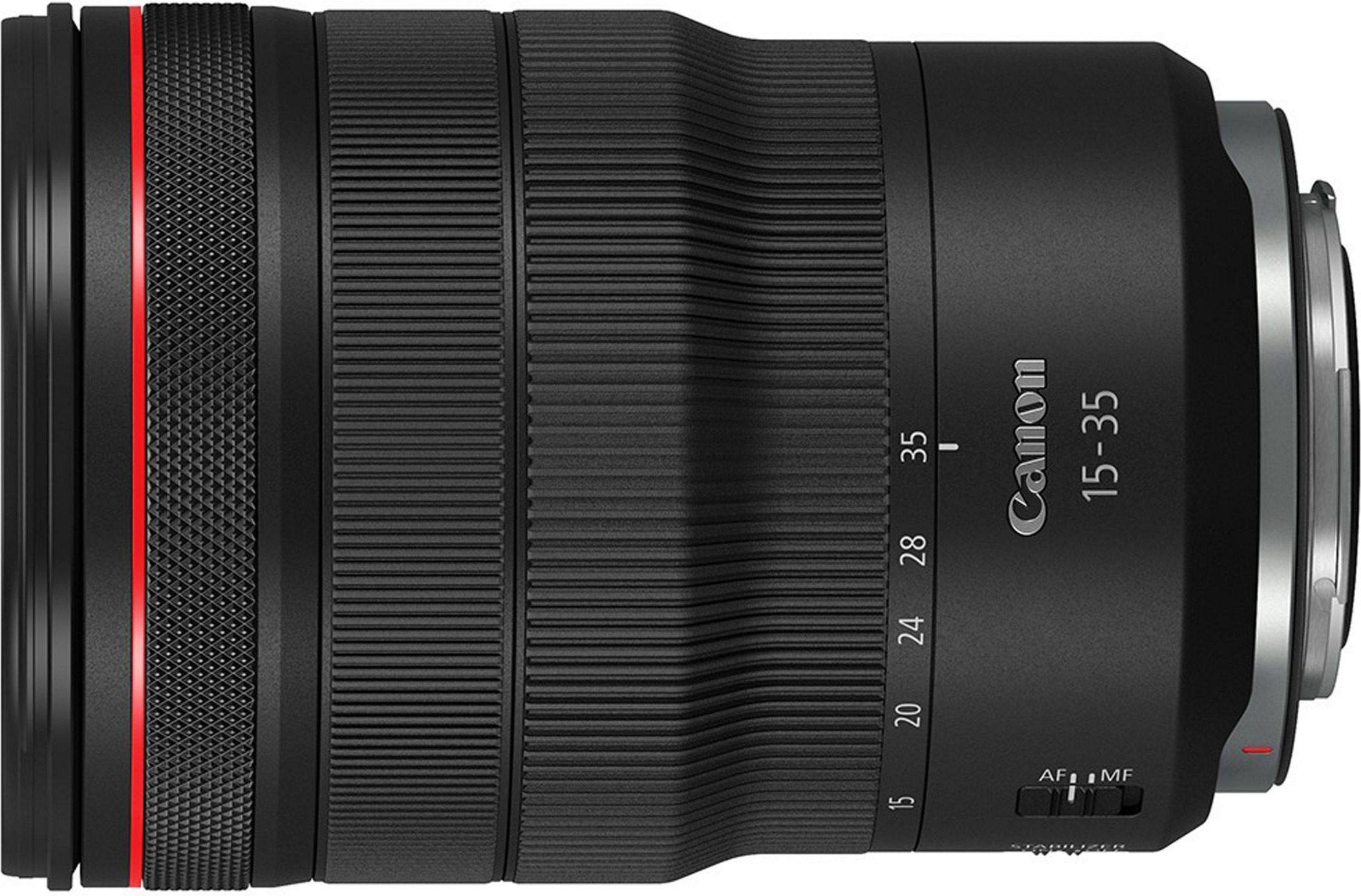
RF 15-35 f/2.8
I came up shooting cityscapes and landscapes, and the longer I did it the wider I wanted to be. My Canon EF 16-35 f/4.0 made pictures I still like, which is exactly why the RF 15-35 f/2.8 took me a while to justify. Aperture is what settled it. I wanted to shoot the night sky, and at f/4.0 you are fighting for every stop you can get. If the night sky is not on your list, be honest with yourself about that: modern sensors handle high ISO well enough that the f/4.0 is a genuinely good lens and a great deal cheaper. In the hand the two weigh close to the same, with the RF slightly ahead.
Both are built like they expect to be dropped, and the RF feels marginally more solid doing it. Image quality is where the money goes: sharp well into the corners, with very little of the edge distortion that makes a wide frame look bent. The extra millimeter at the wide end reads like marketing until you are backed against the wall of a European church, and then it is the difference between the photograph and no photograph. I predicted this would become one of my most-used lenses. That prediction held. It is what goes on the body when the room is small and the light is going.
Still in the bag
- Excellent image quality, minimal edge distortion
- Five stops of stabilization
- 15 mm earns itself in tight rooms
Think twice
- Roughly twice the price of the EF f/4.0
- The EF f/4.0 does most of the same work
- If you are not chasing the night sky, buy the cheaper one
Lens 02
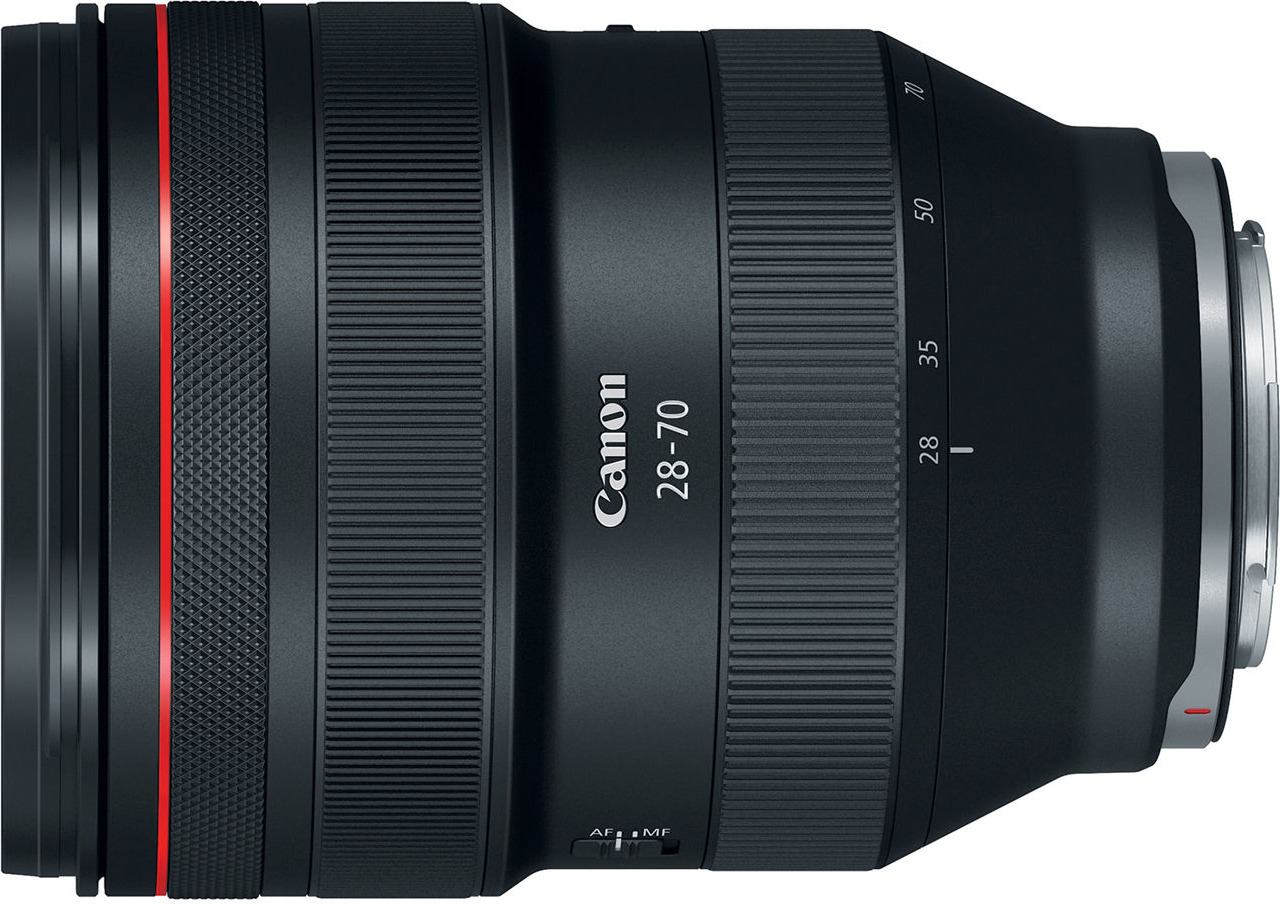
RF 28-70 f/2.0
The one I let go
This is the lens the review turned out to be about, and at the time I had no idea. I loved it. Which did not stop me spending the whole of my ownership quietly looking for reasons to leave it at home, and in hindsight that is the entire answer.
It will shoot an entire wedding without once making you feel limited. Crazy heavy is also accurate. Canon lists it at 3.15 lbs against 1.98 for the f/2.8, and that pound stops being a number somewhere around hour seven. The f/2.0 aperture is genuinely unique, and in a finished print I could never reliably pick it out from an f/2.8. Then there are the 95 mm filters: expensive, and useless on every other lens you own unless you start collecting step-down rings. The wide end stops at 28 mm when the picture wants 24 mm, which sounds like a rounding error right up until the room is small.
What I wrote here the first time was that I had made award-winning pictures with it, and that it was still the one I would skip if I were doing it again. The sentence stays. It was right. The lens is no longer mine, and not once since has a photograph failed because it was missing.
What it did well
- Nothing else gives you f/2.0 across a zoom range
- Image quality that never once let me down
- One lens, an entire wedding
Why it went
- Huge, and heavy in a way you feel by the end of a day
- 95 mm filters fit nothing else you own
- 28 mm on the wide end when you want 24 mm
- In a print, will you really see f/2.0 instead of f/2.8?
Lens 03
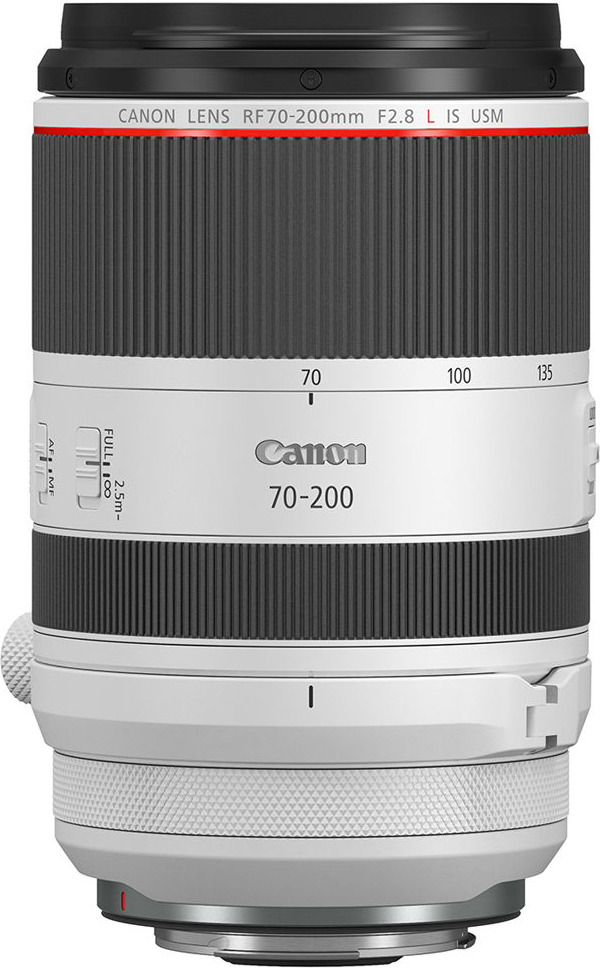
RF 70-200 f/2.8
I love this lens.
Pure love. In every way. That might sum it up.
Canon got image quality like this into a barrel this small, and I am still slightly astonished by it. The 70-200s I grew up around ate most of a camera bag and announced themselves across a room. This one rides on a strap all day and separates a person from their background without changing anything else in the frame. Years on it is still in the bag, and nothing has come along that I would rather carry. Just buy it.
Still in the bag
- Far smaller and lighter than a 70-200 has any right to be
- Carries all day without complaint
- Still doing the same job, years later
Think twice
- None have surfaced yet
A question
Ask me anything.
A place, a print, a lens, a collaboration. I read every one of these myself.