



Florence, Italy A location guide
Florence photography spots
The five places I go back to for photographs in Florence.
The short answer
What are the best places to photograph in Florence?
Five spots cover most of what I shoot in Florence: the Duomo, Ponte Vecchio, Piazzale Michelangelo, Palazzo Pitti with the Boboli Gardens, and the streets in between. Here’s roughly the order I’d shoot them in.
- 01The Duomo — up close and from abovePiazza del Duomo at ground level, or climb Giotto’s Bell Tower for the dome in your frame.Sunrise
- 02Ponte Vecchio, from the next bridge overSkip the bridge itself — shoot it from Ponte Santa Trinita or Ponte alle Grazie instead.Morning
- 03Piazzale MichelangeloArrive an hour early for the classic panorama over the whole city.Sunset
- 04Palazzo Pitti and the Boboli GardensPlan at least four hours between the palace facade and the gardens above it.Any light
- 05Street photographyFlorence’s markets, cafes and alleys, worked with a 24-105mm.All day
Before you go
What gear do you need to photograph Florence?
I used my RF 24-105 f/4 about 70% of the time and my RF 10-20 f/4 the rest. I think that was the perfect combination. I also brought an RF 100-500 for zoomed-in architectural photos but never used it.
Florence is almost all getting around on foot, so you want lightweight gear. It was impossible to get an Uber, and taxis are scarce. Unless you want to risk your life on an e-scooter on cobblestones, you’re going to walk a lot — we did 60 miles on our trip. Bring a Platypod instead of a tripod: it’s lighter and easier to pack, and you can use it everywhere a tripod is off limits.
The five spots
Where should you take pictures in Florence?
Spot 01
The Duomo — up close and from above
Piazza del Duomo, Florence, Italy
- Best light
- Sunrise
- Where to stand
- Piazza del Duomo for ground level, or Giotto’s Bell Tower if you want the dome in your frame
- Also worth it
- Fat Tire Tours for the dome climb
- Learn more
- Duomo website

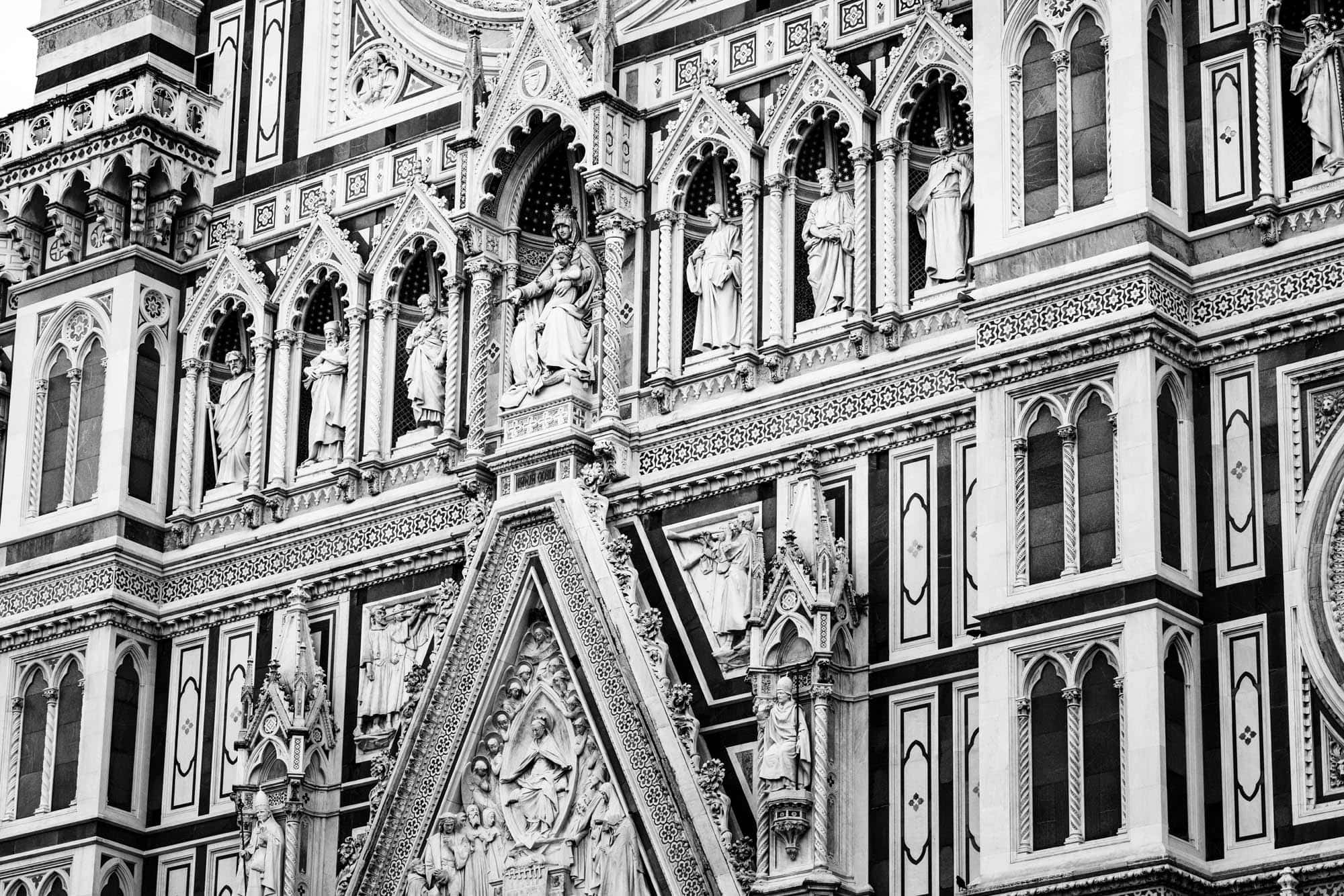
The Duomo (Cattedrale di Santa Maria del Fiore) anchors the whole city with its marble facade and red dome. Standing in the Piazza del Duomo at sunrise is worth the early alarm: the soft morning light moves across the green, white and pink marble, revealing textures and colors that get lost during the day. Get close to the bronze doors and relief sculptures for detail shots.
If you climb the dome, book a group tour in advance — I didn’t realize that until we were there, but we got lucky and found one. It’s 463 steps with two rest stops along the way, and the payoff is sweeping views over Florence’s terracotta rooftops toward the Tuscan hills. For the Duomo itself in your frame, climb Giotto’s Bell Tower instead, ideally at sunrise or golden hour, before the crowds arrive.
The whole guide on video: all five spots in about sixteen minutes.



Spot 02
Ponte Vecchio, from the next bridge over
Ponte Vecchio, Florence, Italy
- Best light
- Sunset into blue hour
- Where to stand
- Ponte Santa Trinita, or Piazzale Michelangelo for a wider view
- Gear
- A Platypod steadies a long exposure on either bridge without a tripod
- Afterward
- Rasputin, a speakeasy behind an unmarked door

The Ponte Vecchio is Florence’s most photographed bridge, but I don’t think it’s worth shooting from the bridge itself. At night they board up the shops, and during the day it’s too crowded to work. The real beauty is in viewing it from the bridges on either side.
My favorite vantage point is Ponte Santa Trinita: you can frame the bridge with its reflection on the water in the morning, sun rising behind it. My second favorite is from Piazzale Michelangelo, but leave enough time to get up there. Bring a Platypod so you can set up for a long exposure on either bridge without needing a tripod.


Spot 03
Piazzale Michelangelo
Piazzale Michelangelo, Florence, Italy
- Best light
- Sunset
- Where to stand
- Arrive an hour before sunset and claim a spot at the railing
- Gear
- A Platypod, strapped to the railing with their accessory strap
- Keep in mind
- It gets crowded fast — arrive early for a spot for long exposures

If you want the classic panoramic shot of Florence, this is the place. Plan to arrive an hour before sunset: the golden light washes over the city, picking out the Duomo, Palazzo Vecchio and the Ponte Vecchio in the distance. As the sun drops, the city turns into a glowing scene, lights coming on against the darkening sky.
It gets crowded fast, so get there early if you want a spot for long exposures. I strapped my Platypod to the railing with their accessory strap. Use the cypress trees and the Tuscan hills to frame the shot, and bring a telephoto lens to compress the view and pull the landmarks together against the skyline.

Spot 04
Palazzo Pitti and the Boboli Gardens
Piazza de’ Pitti, Florence, Italy
- Best light
- Early morning, or an overcast day for even light on the facade
- Plan on
- 4 to 6 hours between the palace and the gardens
- Tickets
- Combined tickets with the Uffizi are worth booking together

Palazzo Pitti paired with the Boboli Gardens is a rich blend of architecture and nature, and it’s less crowded than the other landmarks despite being just as worth it. Focus on the symmetry of the facade: early mornings or overcast days give the most even light, and the muted stone contrasts well against the greenery.
The palace is big, so plan on at least four hours, if not longer. The gardens are a peaceful retreat after: shaded paths, fountains and sculptures, with elevated terraces that open onto wide views over the city, good for a wide-angle lens. Midday light filtering through the trees can create dramatic contrast, so keep your camera out even in harsh light.


Spot 05
Street photography
Florence, Italy
- Best light
- Morning, for Florence’s earthy tones
- Lens
- A 24-105mm, to move between portraits and wider scenes without swapping glass
- Panning shots
- Shutter speed between 1/20 and 1/60 for cyclists and scooters

Florence’s streets are alive with textures, characters and stories, from bustling markets to quiet alleys where artisans work. I use a 24-105mm lens to switch between portraits and wider scenes. For panning shots (cyclists and scooters are everywhere), set your shutter speed between 1/20 and 1/60, track the subject smoothly, and let the background blur for a sense of motion.
Morning light brings out Florence’s earthy tones, so get out early. Don’t overlook the quiet, candid moments either: a florist arranging blooms, a barista pouring espresso in a centuries-old cafe, light through shuttered windows onto rustic walls. The city’s beauty is as much in those details as in its landmarks. Back home, Alisha and I bring the same eye to senior portraits in La Crosse.


The lay of the land
Where is each spot?
Tap any spot to open directions in Google Maps.
Bonus
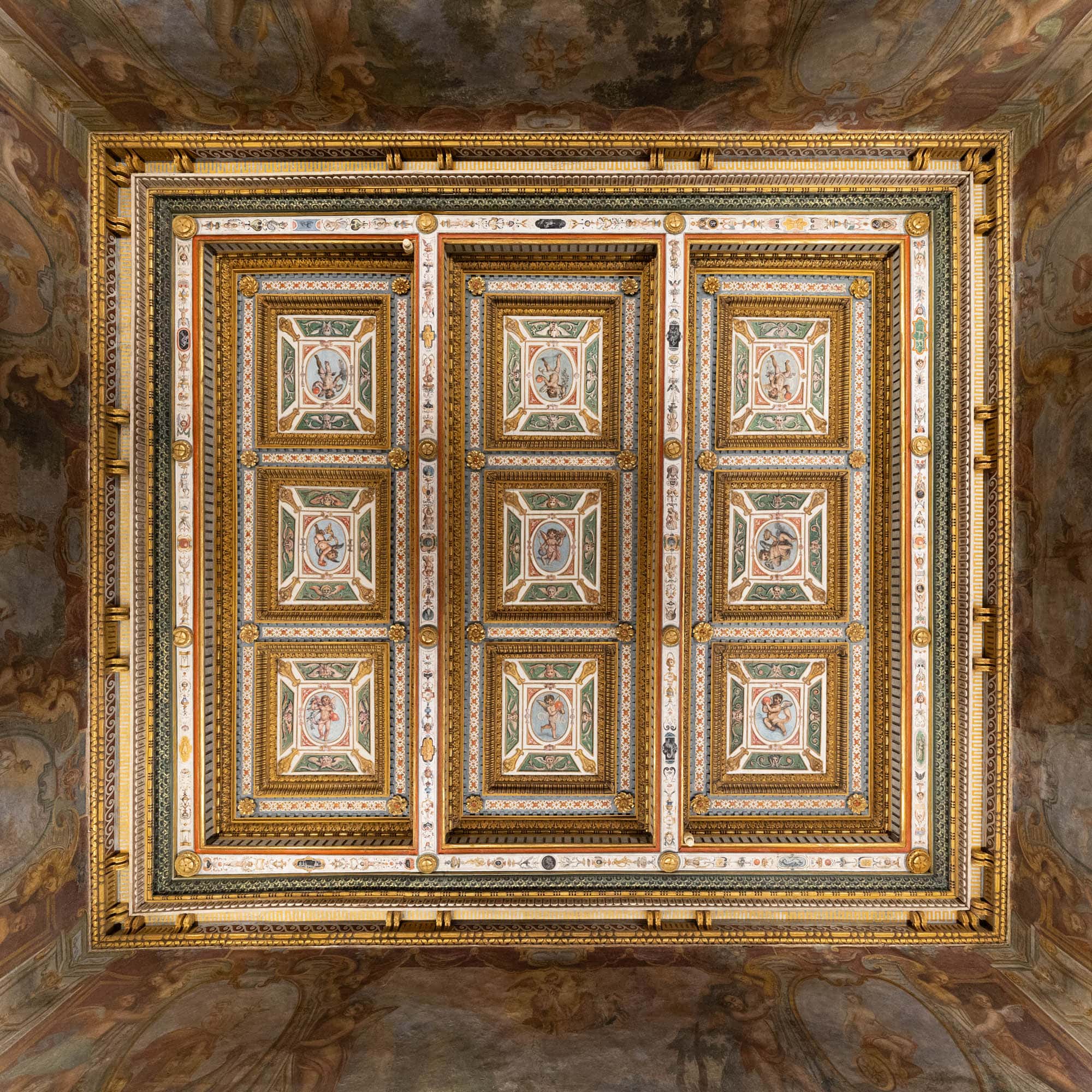
What do Florence’s ceilings look like through a 10-20mm?




More frames
More from Florence


Prints
Florence, printed to order.
Every photograph on this page is mine. The ones in the collection ship framed or on metal, in three sizes, printed to order.
Questions
What people ask me about photographing Florence
Is it worth climbing Brunelleschi’s Dome?
Yes, but book a group tour in advance — you can’t just climb on your own. It’s 463 steps, with two rest stops along the way, and the view over Florence’s terracotta rooftops toward the Tuscan hills is worth every one of them.
Should you photograph the Ponte Vecchio from the bridge itself?
I don’t think so. At night the shops are boarded up, and during the day it’s too crowded to work. Shoot it from Ponte Santa Trinita instead, or from Piazzale Michelangelo for a wider view.
When should you go to Piazzale Michelangelo?
Arrive about an hour before sunset. It gets crowded fast, so get there early if you want a spot at the railing for a long exposure — I strapped my Platypod to it with their accessory strap.
How much time should you plan for Palazzo Pitti and the Boboli Gardens?
At least four hours, if not longer. The palace alone is big, and the gardens above it are worth the extra time for the elevated views over the city.
What’s the best way to shoot Florence’s street life?
A 24-105mm lens covers portraits and wider scenes without swapping glass. For cyclists and scooters, set your shutter speed between 1/20 and 1/60 and pan with the subject so the background blurs.
What gear did you bring to Florence?
My RF 24-105 f/4 covered about 70% of the trip and my RF 10-20 f/4 the rest, and that combination worked well. I brought an RF 100-500 for architectural details but never used it, and a Platypod instead of a tripod, since we walked 60 miles and it’s lighter to carry.

More guides
Where I’ve pointed the camera next
A question
Ask me anything.
A place, a print, a lens, a collaboration. I read every one of these myself.